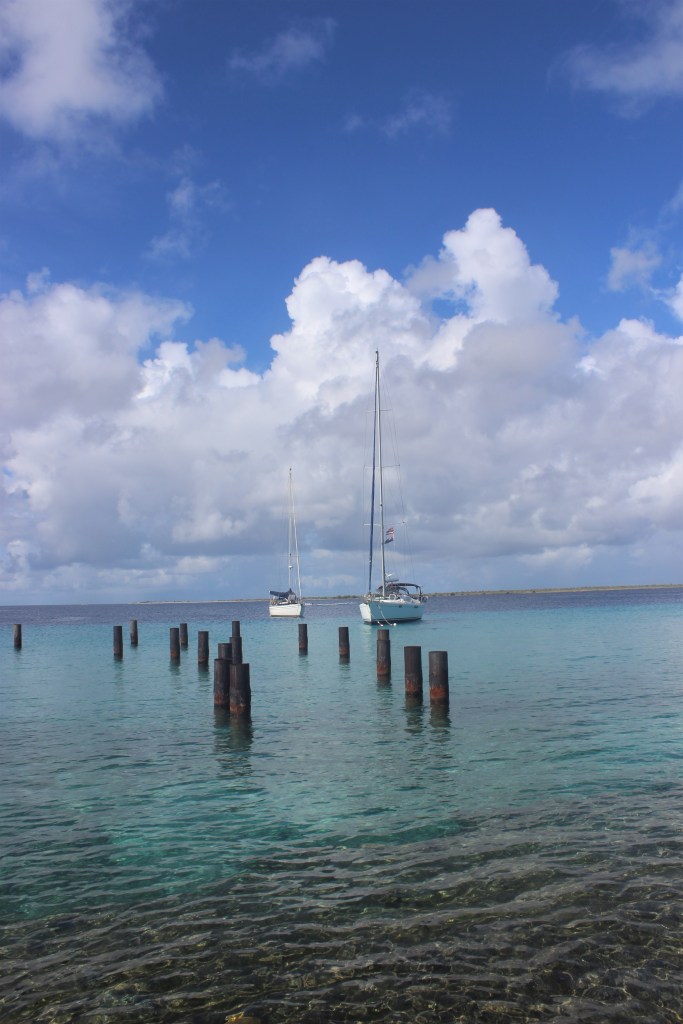
Bonaire is located 60 miles off the coast of Venezuela, until 2010 it was part of the Netherland Antilles, it is now considered a municipality of the Netherlands. The water is strikingly clear and it’s quickly apparent why it is known as a diver’s paradise, even announcing it on their license plates.


One of Bonaire’s main exports is salt and the bright white salt pyramids can be seen from miles away. The Spanish were the first to export when they arrived in the 17th century, followed by the Dutch who had a very lucrative run with salt between 1850-1863 but salt exports dwindled with the abolishment of slavery. In the 1960’s salt production began to grow again on Bonaire and Cargill now runs the current operation. It is a solar salt harvest which means the sun and wind are used to evaporate the water, moving the salt water from condensation ponds to crystalization ponds as the salinity rises. It takes two to three months to transform from salt water to harvested salt crystals. The salt is shipped all over the world for many different uses (road salt, table salt, water softener salt, and for industrial processing in other industries).

It was shocking to see the small huts the salt slaves lived in, they weren’t much bigger than a large dog house and 6-10 people would live in them at the same time!
Another remainder from the Spanish are donkeys, they were used in salt transportation, as technological advances were made they were set free and there is now a significant population of wild donkeys on Bonaire. While it was fun to see them wandering around loose, Bonaire is a pretty arid island and many suffer from starvation, dehydration and vehicle accidents. There is now a Donkey Sanctuary on the island who help rehab the sick and injured donkeys, as well as funding castration of the males for population control.

Nowadays the salt is moved with trucks and conveyor belts to ships.

At the southern end of the salt ponds is Pekelmeer Flamingo Sanctuary, home to over ten thousand flamingos. It is the largest pink flamingo sanctuary in North America and one of only four breeding areas in the world.


 Curvy Cruiser